
When customers ask, “How much do your jacks cost?”, the better question to ask is:
How much do your current jacks really cost you over time?
For high-use roadside operations, lifting equipment isn’t a one-off purchase but a recurring expense. When tools are used 3-7 times per day, 7 days a week, small weaknesses quickly become expensive problems.
Here’s what the long-term data shows.
A Real-World Case Study: 300+ Roadside Patrol Vehicles
One major roadside assistance provider in NSW, Australia, operating more than 300 patrol vehicles, replaced their hydraulic jacks with Selson HBNXLO Air Jacks.
After switching to Selson, each patrol uses their jacks between 3-7 times per day, performing roughly 1,825 lifts per year. They also carry extension caps allowing them to handle a wide range of vehicles.
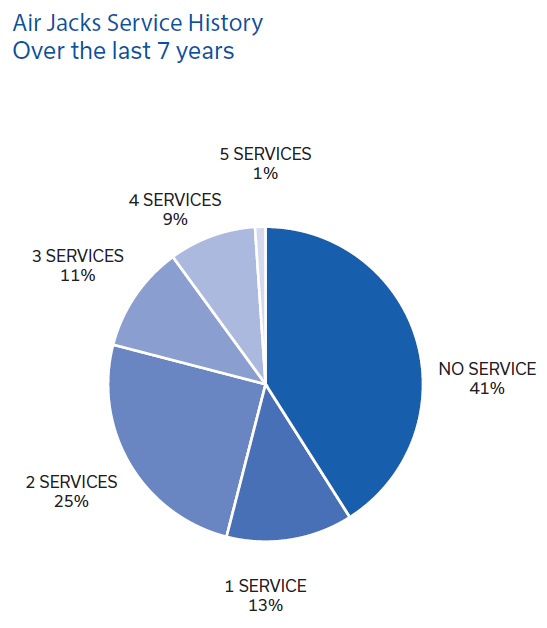
The initial rollout involved 350 Selson Air Jacks in 2012/2013, and Selson tracked the service history data for seven years.
The True Cost of “Cheap” Hydraulic Jacks
Before switching, this provider was replacing 2-3 hydraulic jacks per van per year. Even at a conservative $200 AUD per jack, that equates to:
- ~$200,000 AUD per year
- ~$1,400,000 AUD over seven years
And that’s just purchase cost. No downtime, lost productivity, or waste.
Cheap jacks are often treated as disposable. They aren’t serviced, get replaced when they fail, and they rely on high-volume, low-cost manufacturing.
On paper they look affordable. In practice however, they become a recurring liability.
The Selson Investment: What It Actually Cost
The same customer invested:
- $186,000 AUD initial rollout
- $Approximately $14,000 AUD per year in ongoing maintenance
Over seven years, the total cost came to approximately $284,000 AUD.
Compare that to the $1.4 million in hydraulic jack replacements over the same period.
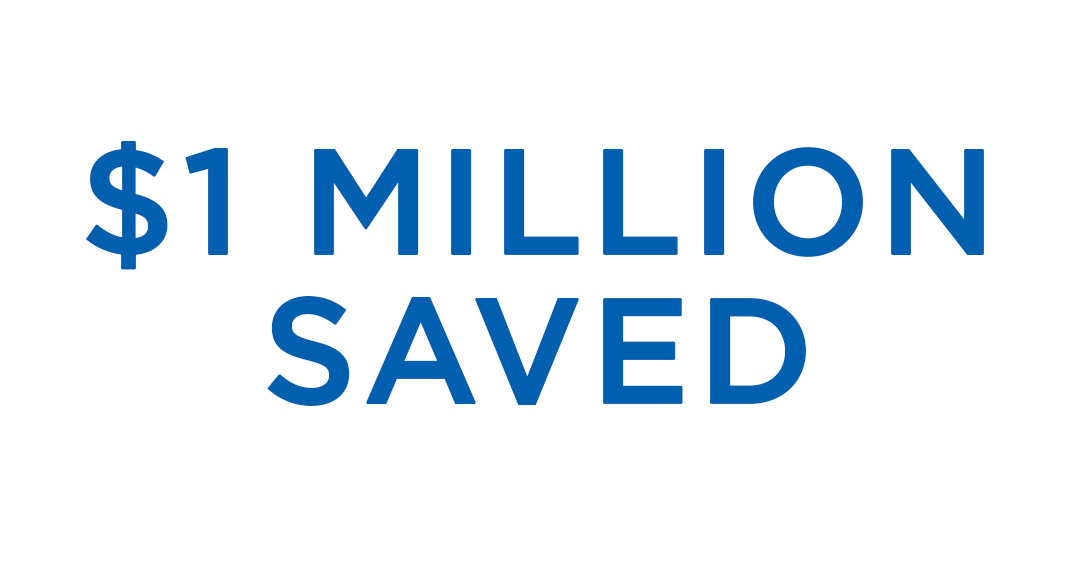
That’s a saving of over $1 million AUD.
Why the Savings Are So Significant
The difference isn’t magic. It’s engineering.
Selson Air Jacks are designed with:
- Fewer moving parts
- Serviceability by design
- Robust manufacturing
- Long service life
Over seven years, 41% of jacks required no service at all.
Rather than replacing thousands of failed units, the provider repaired and maintained its equipment as needed.
That’s the difference between a disposable product and a long-term asset.
Over 7,000 Jacks Saved From Landfill
There’s also an environmental impact.
Prior to switching, this customer was purchasing approximately 1,000 hydraulic jacks per year. Over seven years, that would have meant more than 7,000 jacks discarded.
By switching to Selson, they purchased only 481 air jacks over the same period.
The result?
In a world increasingly focused on sustainability and responsible procurement, this matters.
It’s Not About the Purchase Price
Low-cost hydraulic jacks appear cheaper at first…until you factor in the frequency of replacements and the rate of failures. This leads to increased downtime and labour disruption as well as increasing your environmental impact.
Selson Air Jacks are not designed to be the cheapest product on the market. They’re designed to be the BEST product on the market.
Durability, reliability and repairability are at the core of what we do.
If your operation uses lifting equipment occasionally, replacement cost may not be significant. But for high-use environments, such as roadside assistance fleets, recovery operators and service vans, lifting equipment is a daily operational tool.
The question isn’t “How much does this jack cost?” it’s “What will this jack cost me over the next seven years?”
For one major roadside provider, the answer was clear:
Over $1 million saved.
Over 7,000 jacks kept out of landfill.
A tool designed to last, not to be replaced.
That’s the Selson difference.