
Roadside assistance work puts lifting equipment under far more stress than a workshop environment. Uneven ground, time pressure, poor weather, and proximity to traffic all expose the limitations of traditional jacking methods.
For many roadside operators, the choice comes down to air jacks or hydraulic jacks. Both can lift a vehicle, but how they perform in real roadside conditions is very different.
Here’s a clear, practical comparison to help roadside technicians and operators understand which option best suits modern roadside work.
The Reality of Roadside Lifting
Unlike workshops, roadside conditions are rarely ideal. Technicians may be lifting vehicles on asphalt softened by heat, gravel, dirt, sand, or uneven verges.
Add limited working space and the need to complete jobs quickly and safely, and lifting equipment needs to be both fast and forgiving.
This is where the differences between hydraulic and air jacks become most apparent.
Hydraulic Jacks
Familiar, but Limited Roadside
Slower Lift Speed
Hydraulic jacks rely on manual pumping. On the roadside, this means more physical effort, longer lift times, and increased fatigue over multiple callouts.
Instability During Lifting
As a vehicle rises, it naturally moves through an arc. Hydraulic jacks often resist this movement, causing the jack to roll, twist, or shift position.
This can force technicians to stop, reposition, and re-lift, costing time and increasing risk.
Performance on Soft or Uneven Ground
Hydraulic jacks typically have a narrow base designed for smooth workshop floors. On softer surfaces, they are more likely to sink or become unstable.
Limited Control Over Lift Height
Hydraulic jacks rely on manual pumping, which can make it harder to raise a vehicle only as high as needed. This often results in over-lifting, slower operation, and reduced control during roadside.
Ongoing Maintenance
Hydraulic systems rely on seals and fluid. Over time, roadside use can lead to leaks, seal wear, and reduced lifting reliability.
Air Jacks
Designed for Real-World Conditions
Faster, Push-Button Operation
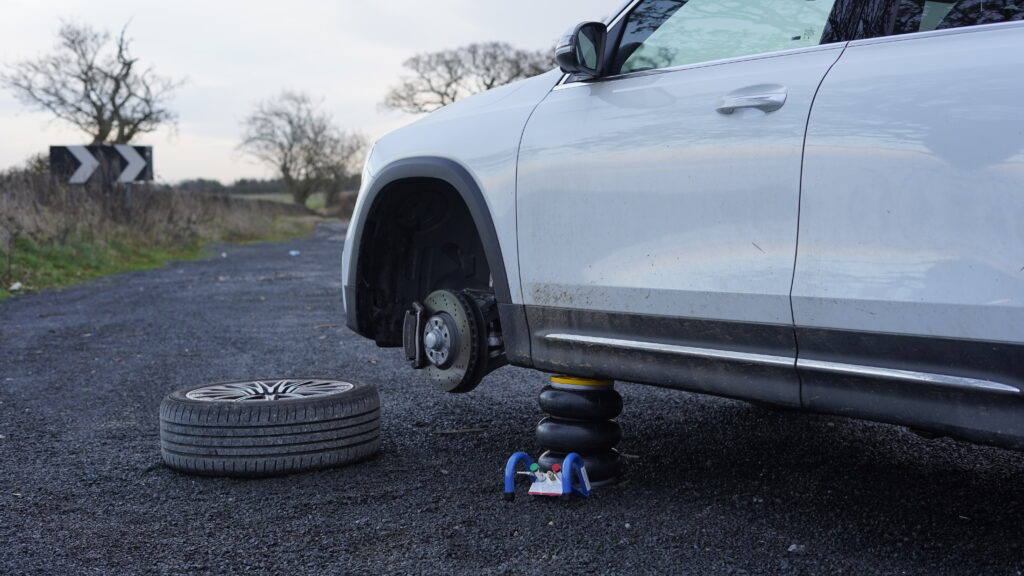
Air jacks use compressed air rather than manual pumping. With simple push-button controls, vehicles can be lifted in seconds rather than minutes, reducing time spent working at the roadside.
Tracking the Vehicle’s Lifting Arc
Air jacks are designed to follow the vehicle’s natural lifting arc as it rises. Instead of resisting movement, the jack self-centres under the load, maintaining stability throughout the lift. This reduces the need for repositioning and allows technicians to lift confidently on the first attempt.
Greater Stability on Uneven Surfaces
With a wide base that spreads the load, air jacks are far less likely to sink into hot asphalt, gravel, sand, dirt, or uneven ground. This stability is a major advantage in roadside environments.
Lower Physical Effort
Because compressed air does the work, technicians experience less fatigue. Over a full shift, this can make a significant difference to productivity and comfort.
Reduced Maintenance
Air jacks have very few moving parts compared to hydraulic systems. This means fewer wear points, lower maintenance requirements, and more consistent performance over time.
Safety Considerations
Speed alone doesn’t make a lifting system safer; control does.
Air jacks are designed with built-in safeguards to prevent over-inflation and overload. Their stable lift and controlled height help reduce sudden movement, especially on uneven ground. As with all lifting equipment, vehicles should always be properly supported before work begins.
Which is Better for Roadside Assistance Vehicles?
For occasional roadside use, hydraulic jacks may still get the job done. But for operators who regularly work roadside, the advantages of air jacks become clear. Air jacks are:
- Faster to deploy
- More stable on real-world surfaces
- Easier on technicians
- More reliable over time
They are better suited to the demands of modern roadside assistance.
A Smarter Way Forward for Roadside Lifting
Choosing the right lifting equipment is about more than tradition or familiarity. It’s about working faster, safer, and with greater confidence in unpredictable roadside conditions.
By eliminating manual pumping, tracking the vehicle’s lifting arc, and providing stable performance on uneven ground, air jacks offer clear advantages over hydraulic jacks for roadside assistance vehicles.
Speed. Safety. Savings.
That’s the Selson way.
Roadside Air Jack FAQs
Yes. Selson Air Jacks use compressed air instead of manual pumping, allowing vehicles to be lifted in seconds. In roadside conditions, this often results in significantly faster lift times compared to hydraulic jacks.
When used correctly, air jacks are very safe. Their wide base helps prevent sinking on gravel, sand, or asphalt, and their ability to track the vehicle’s lifting arc improves stability throughout the lift.
No. Selson Air Jacks are designed with very few moving parts, which keeps maintenance requirements low. Basic maintenance typically involves occasional lubrication of the air valves and ensuring clean, dry air is used.
Selson Air Jacks are designed to operate at 100 psi, which is commonly available from vehicle-mounted compressors or compressed air cylinders used in roadside assistance vehicles.
For regular roadside work, many operators choose air jacks as their primary lifting solution due to faster operation, improved stability, and reduced physical effort. As with all lifting equipment, correct use and proper vehicle support are essential.